“Art is an experience,
not an object.”
Jasmine Zimmerman creates experiences people never forget — a pioneering artist, inventor, and founder of the experiential art movement.
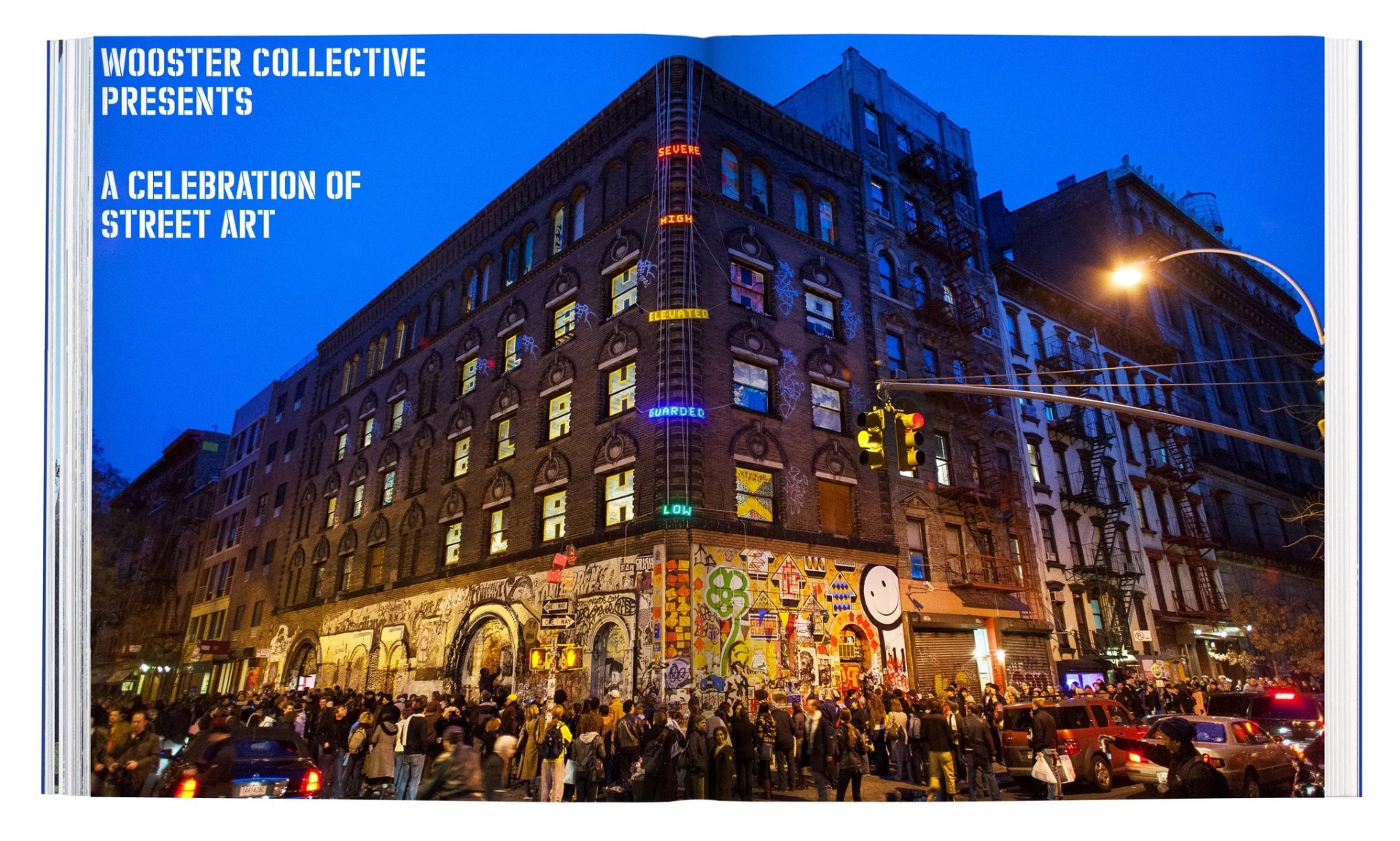
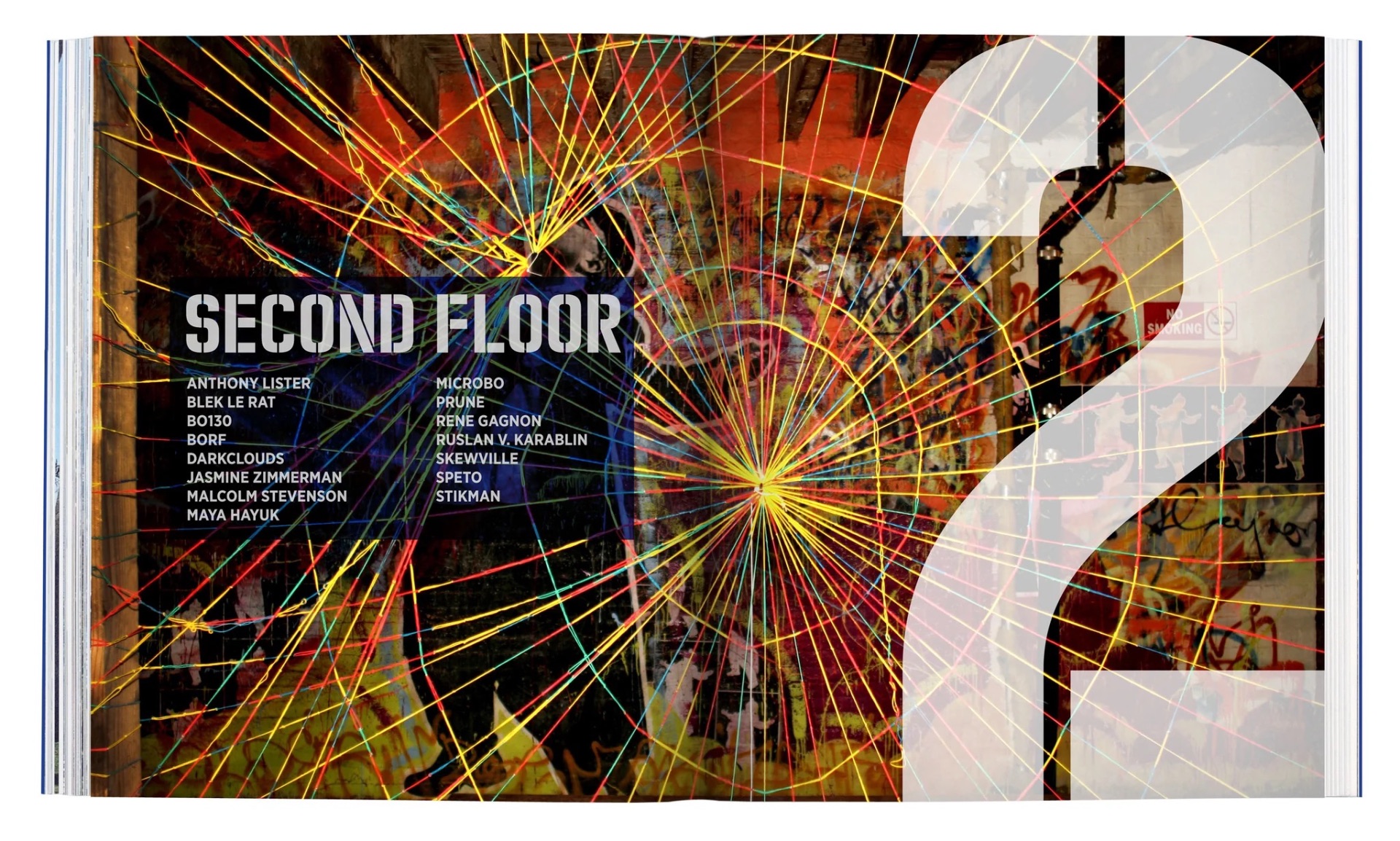
Jasmine Zimmerman is an installation artist who famously collaborated with the street art publication and platform Wooster Collective. She is notably remembered in the street art community for her contribution to Wooster on Spring — a legendary exhibition that transformed an abandoned building at 11 Spring Street in Manhattan's SoHo neighborhood into a massive, multi-floor canvas for the world's top street artists, right before the property was converted into luxury condos.
“This work doesn’t hang on walls. It stops people in their tracks.”
Her work has been featured in the New York Times, Time Out New York, Metro New York, and on Good Day New York. She has been commissioned across six countries.
Zimmerman is recognized for creating site-specific, tactile social sculptures.
Named one of the
“World’s 100 Most Creative Women.”
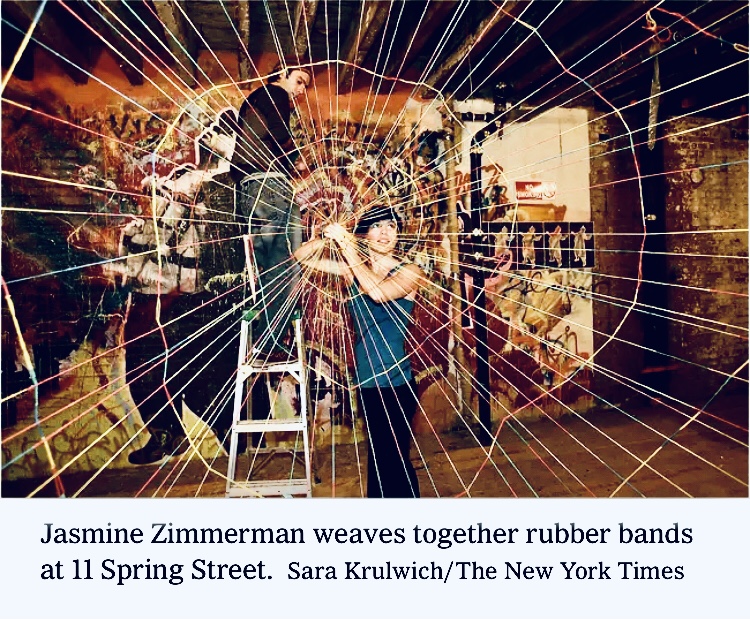
For Wooster on Spring, Zimmerman wove a massive, intricate rubber band web as the centerpiece installation on the second floor.
She also threaded the building itself together — stitching from the ground floor up to the sixth through the knotholes in the old wooden planks, as if sewing a piece of clothing. Six stories became one continuous elastic chain: a tug on one floor reverberated through the entire building, every floor answering the next. The architecture became a single body, and every visitor a pulse inside it.
Beyond 11 Spring Street, Zimmerman has been involved in several prominent interactive, texturally driven open-air art concepts.
Collective String Web
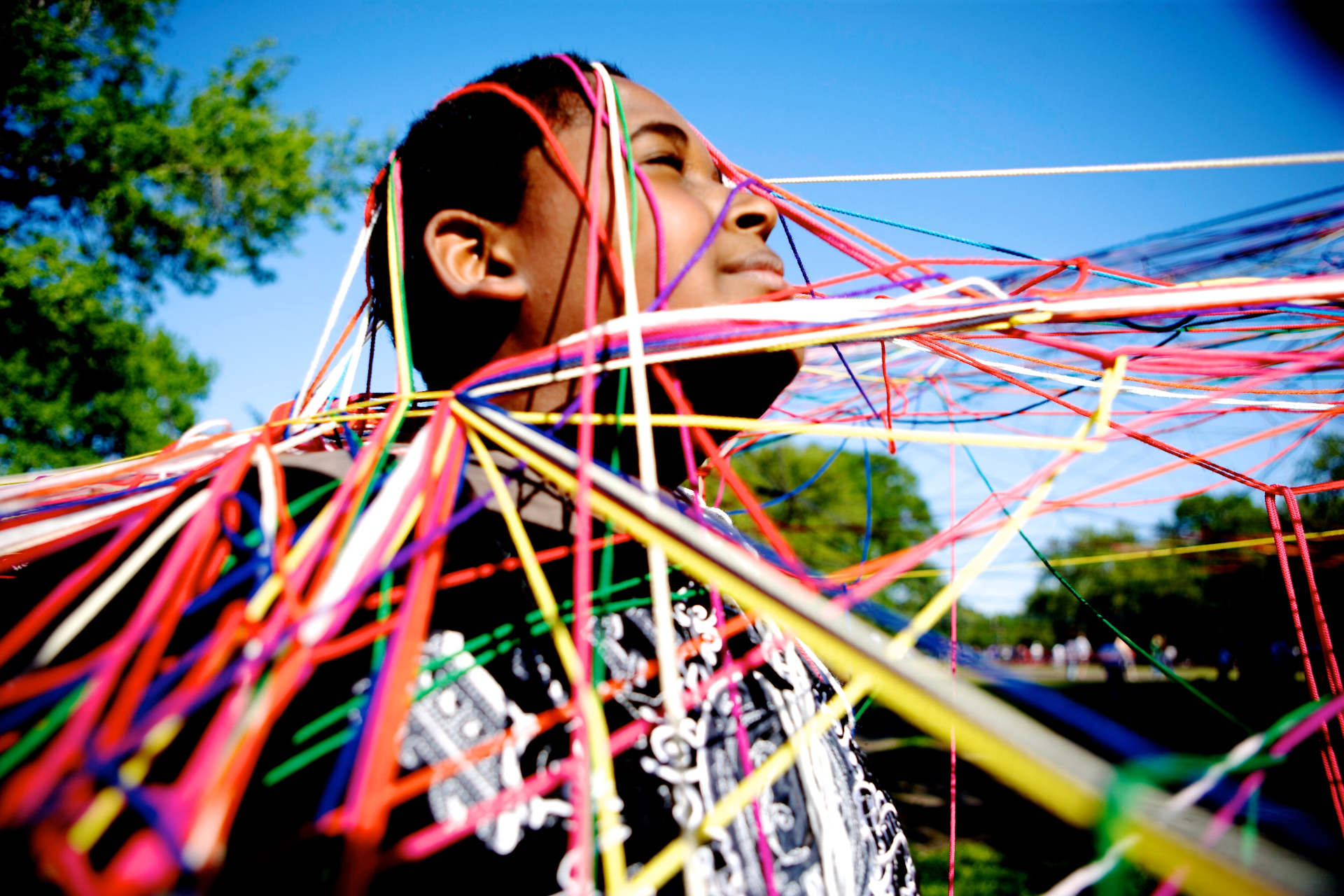
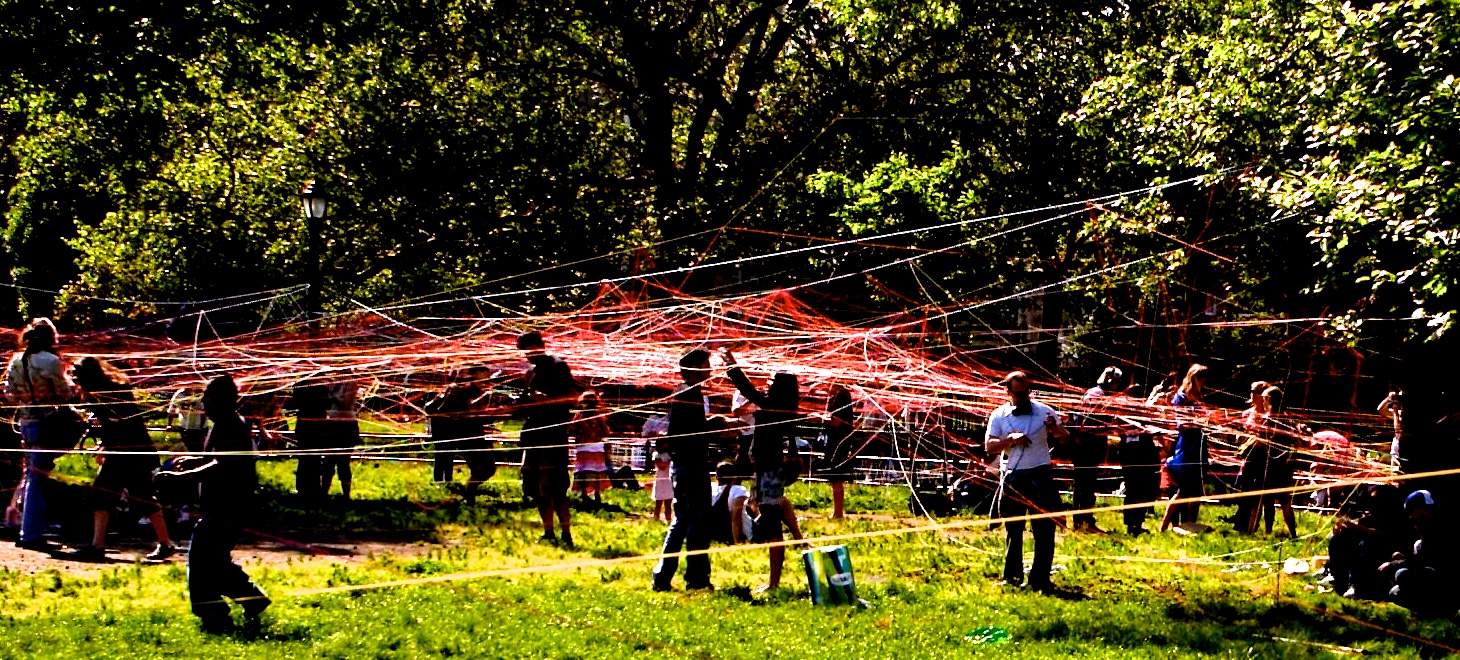
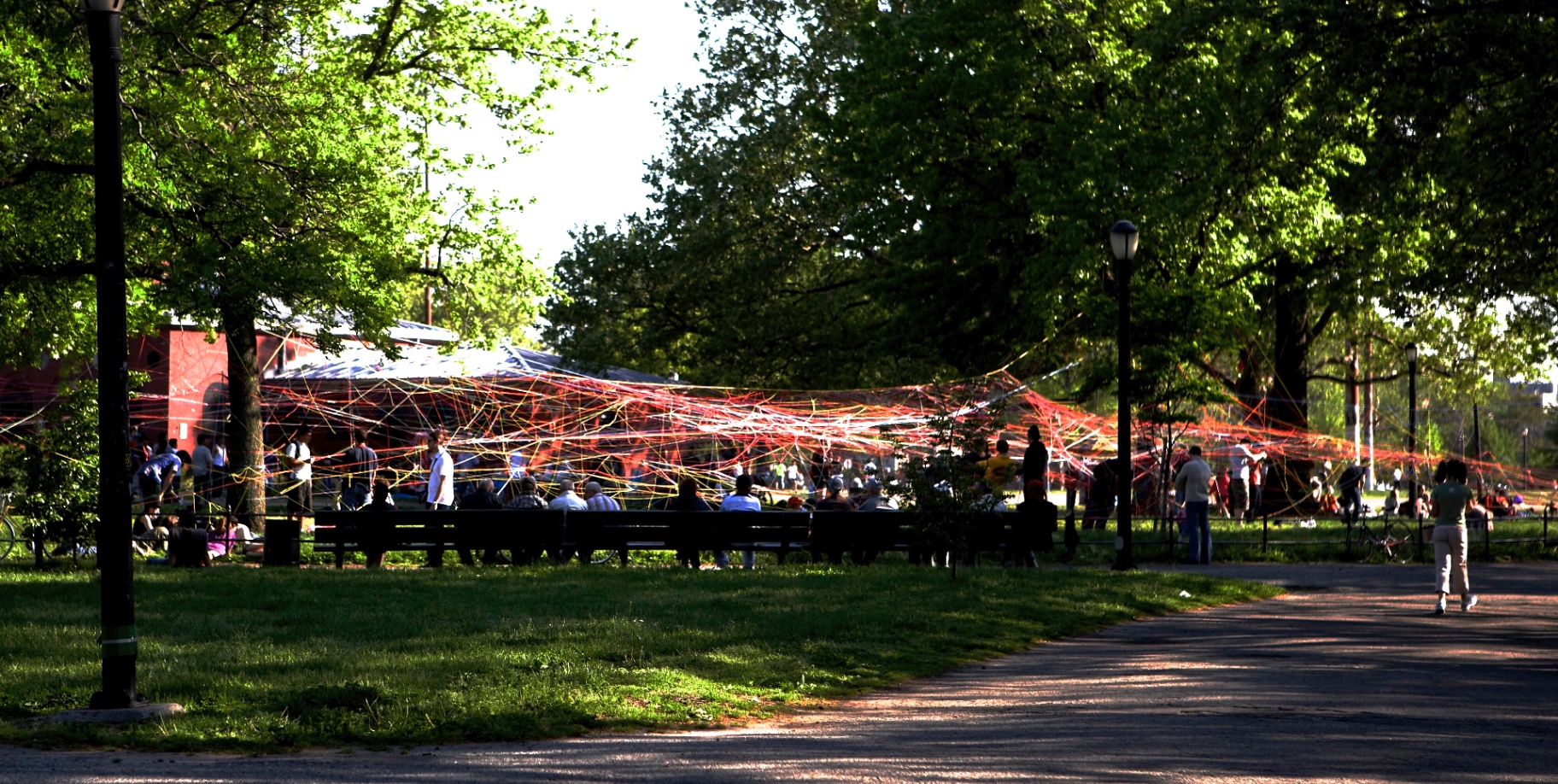
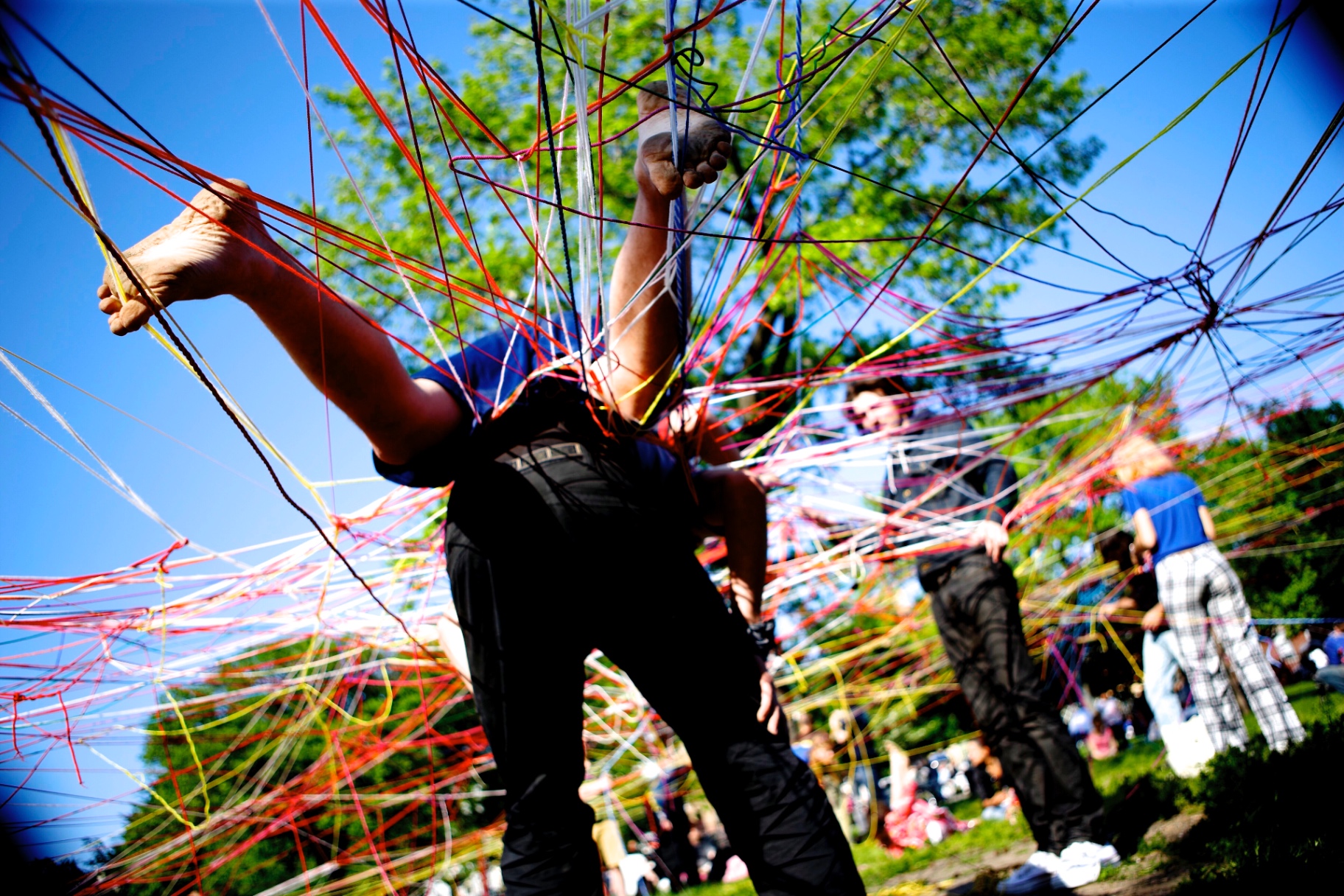
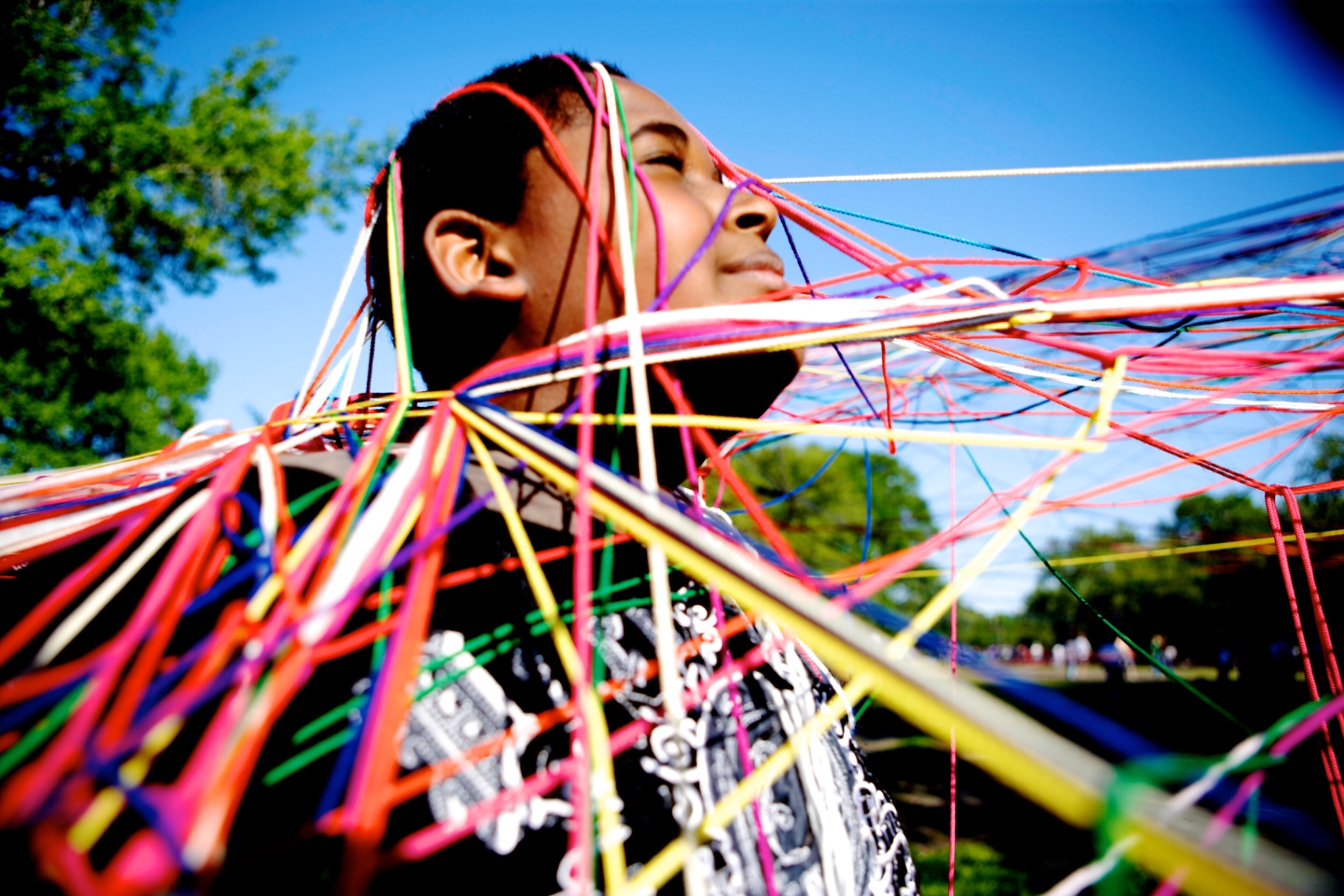
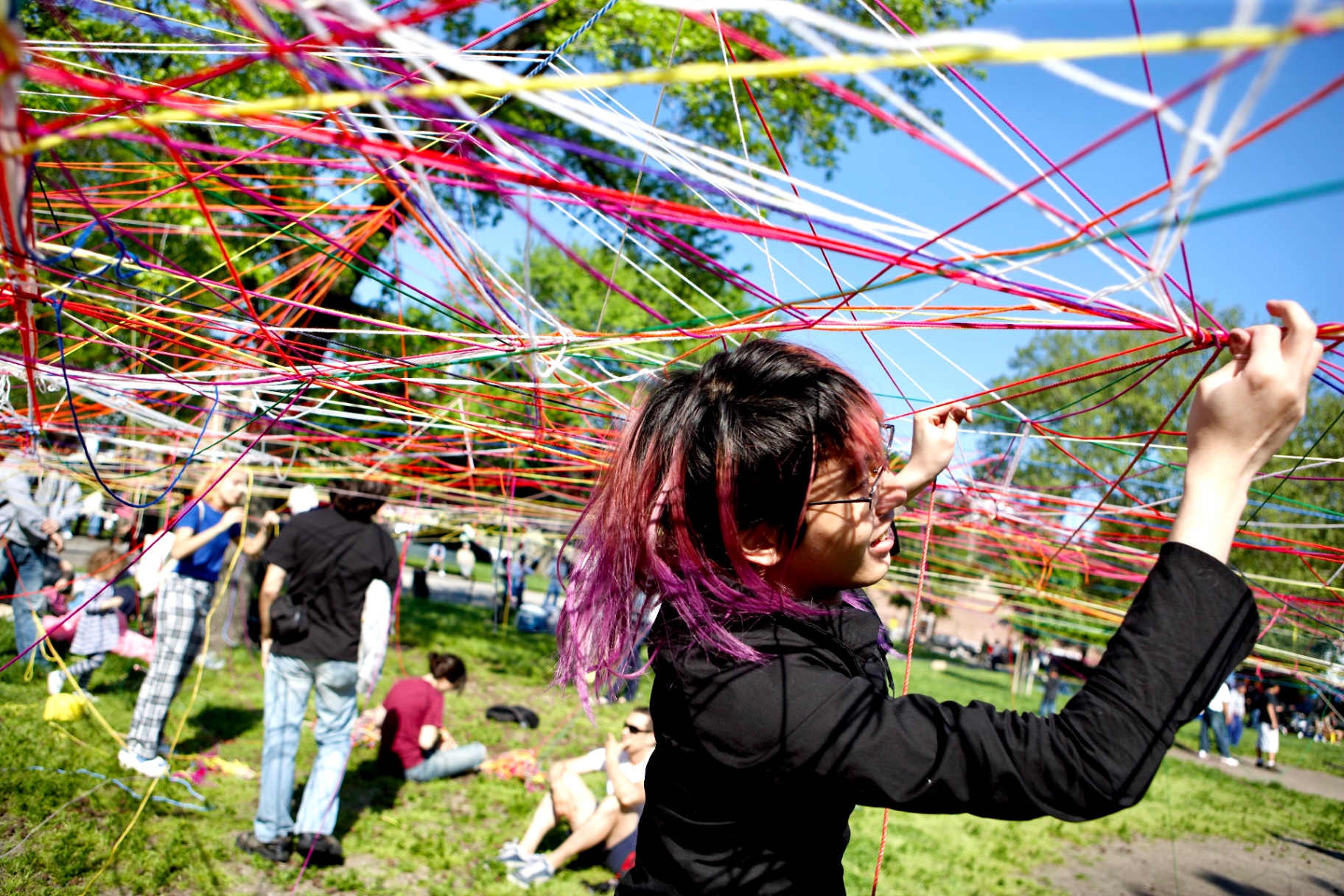
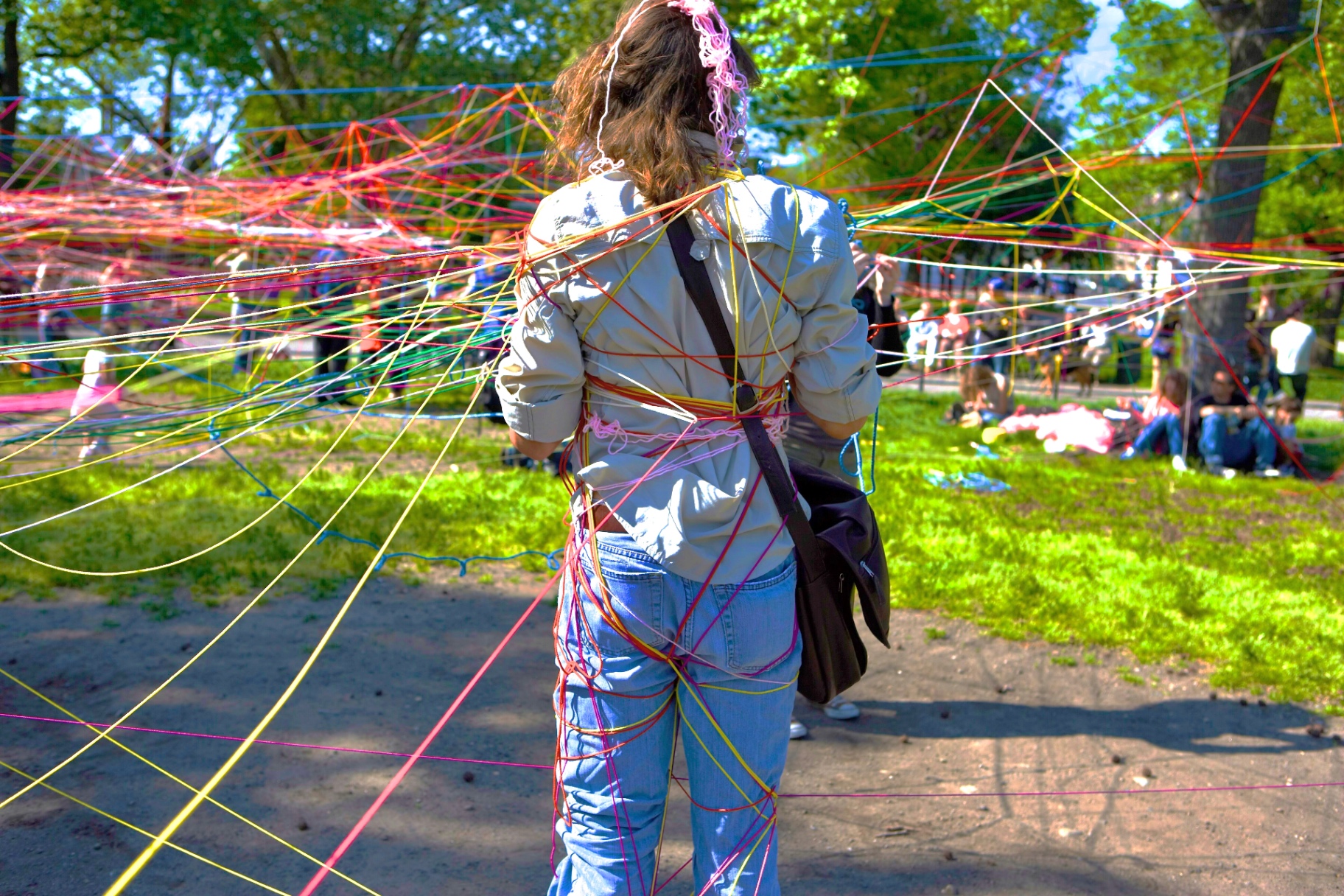
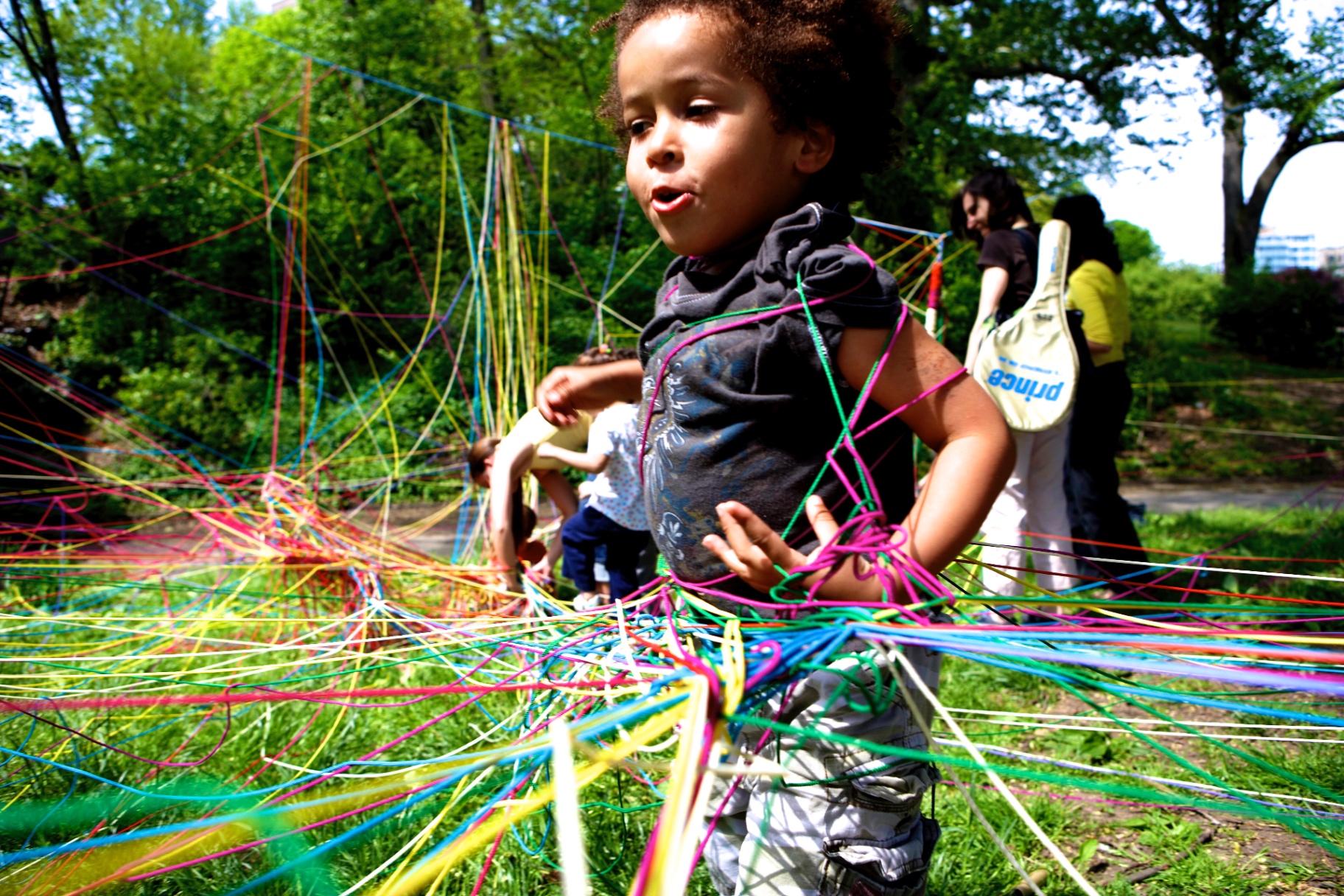
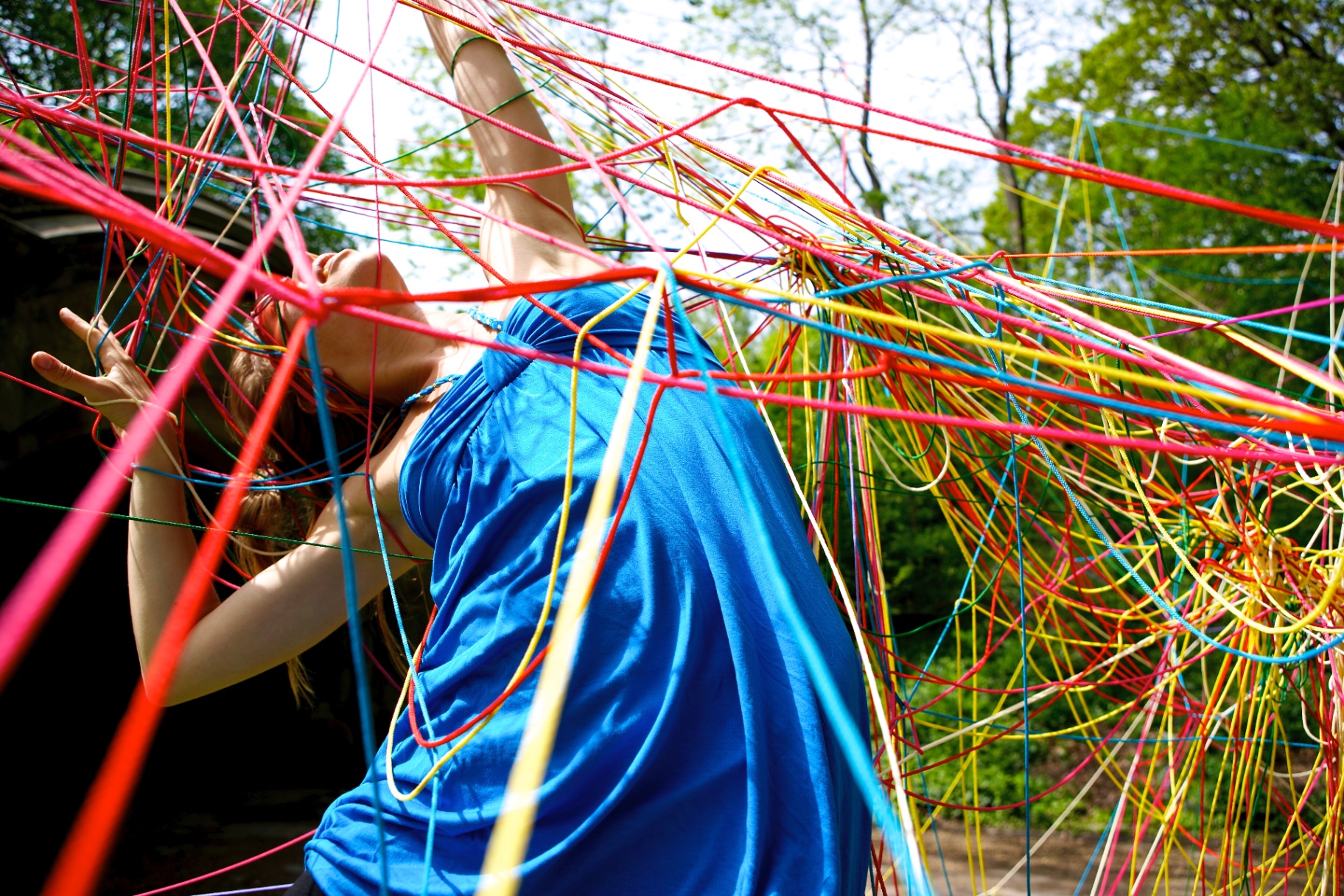
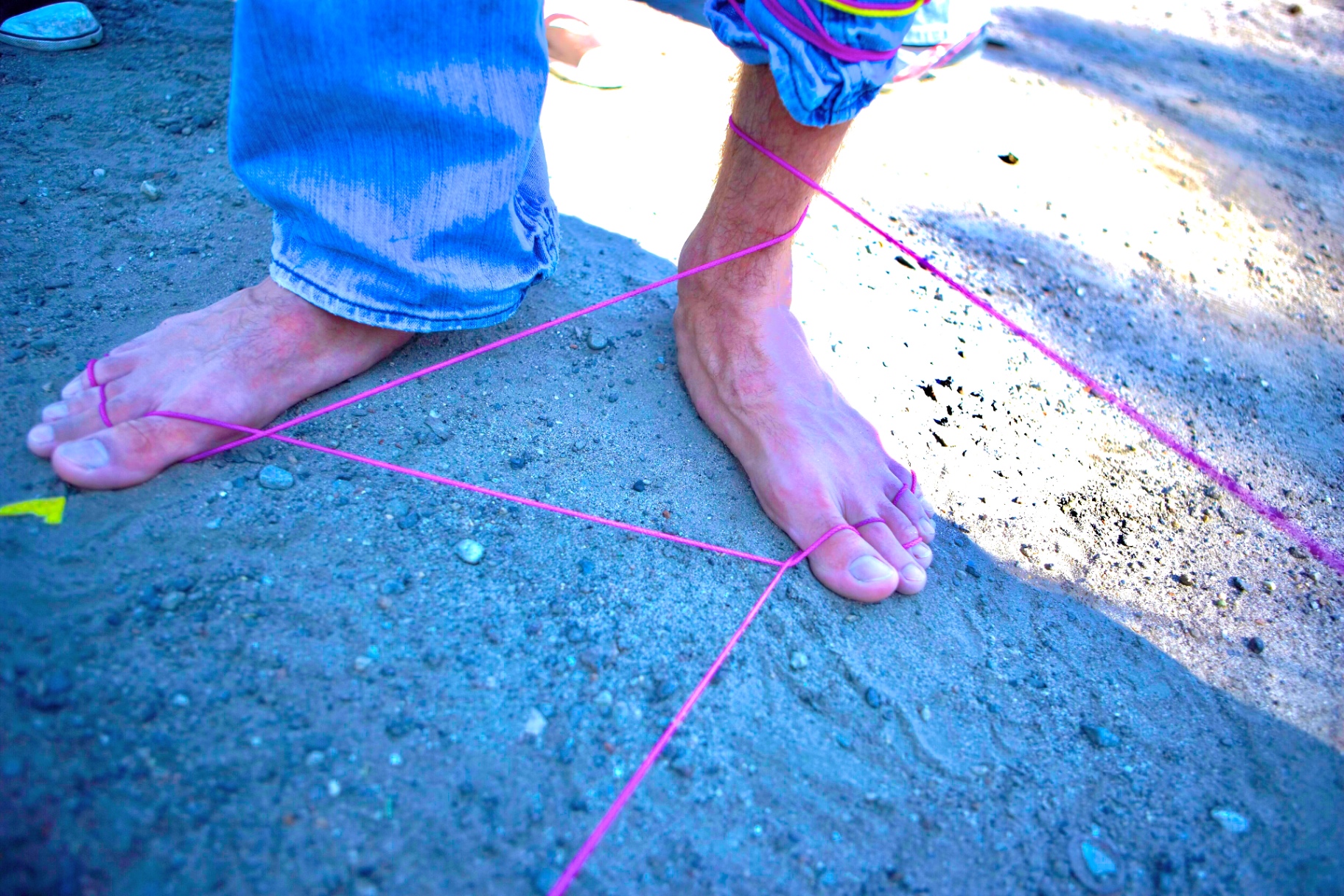
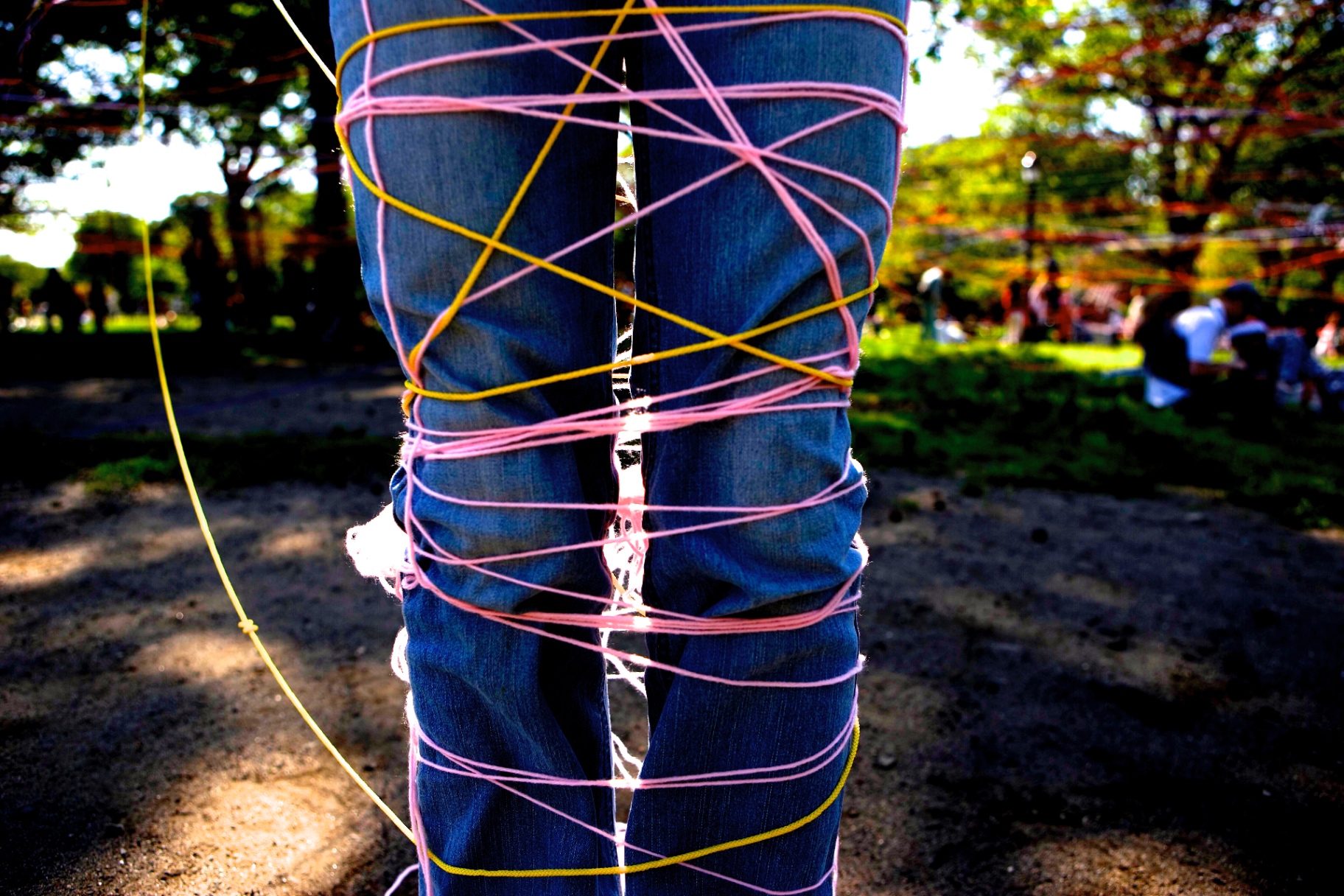
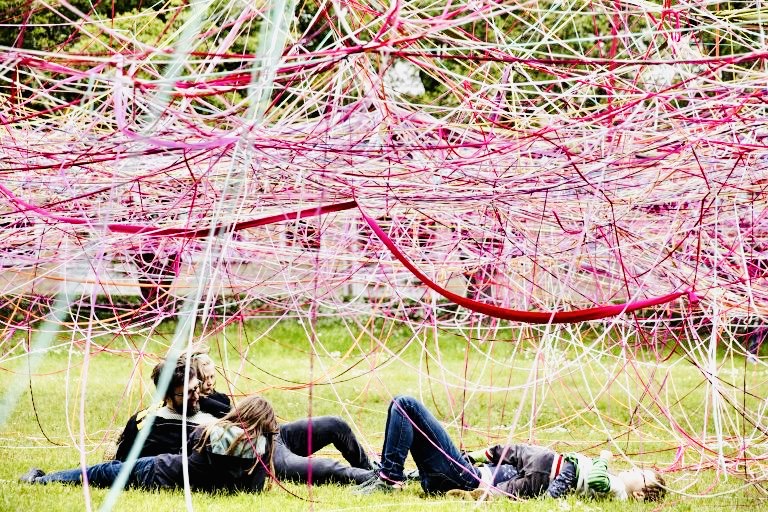
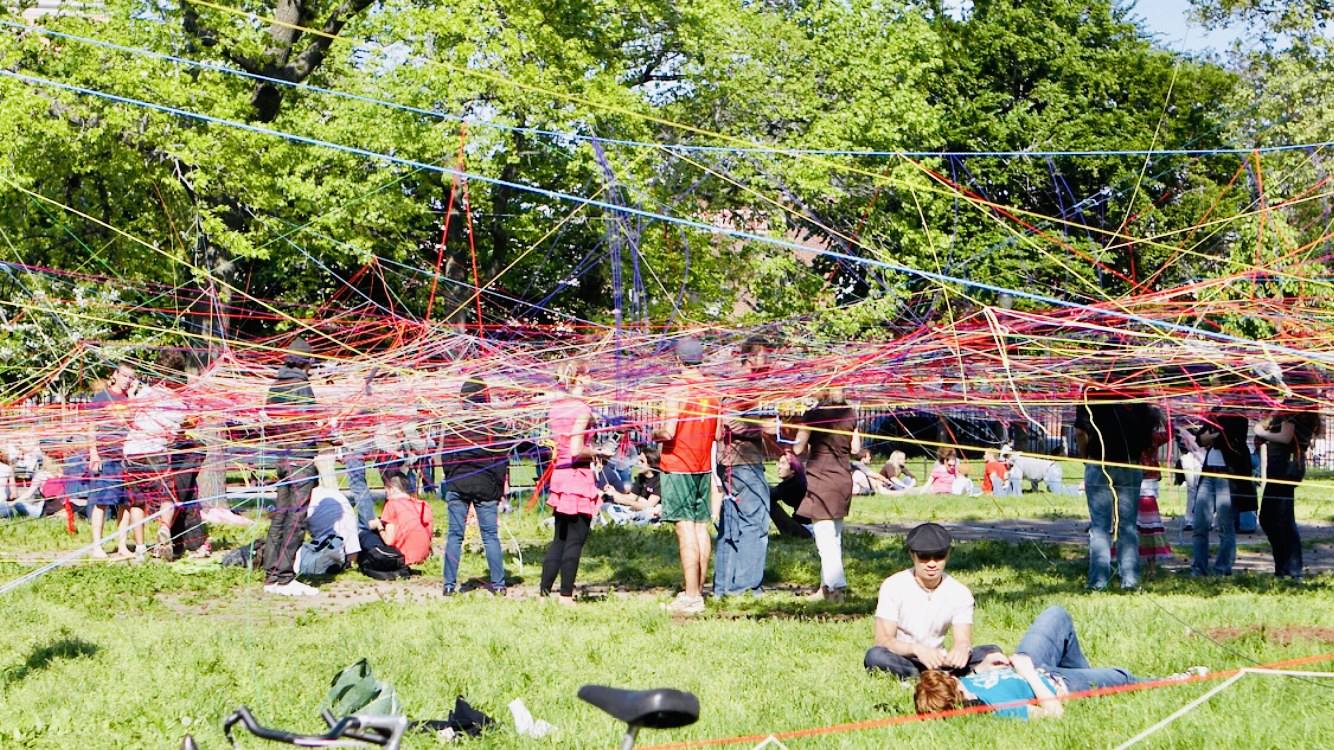
She co-created a massive, interactive installation at McCarren Park in Brooklyn alongside Danish visual artist Karoline H. Larsen. The project spanned 13 miles of intertwined, colorful string, holding up to 200 people inside the installation at once — dancing, walking, and tangling themselves within the art, and each other.
Copenhagen Metropolis Biennale
The following year, the duo were commissioned and funded by the City of Copenhagen to take over any and all parts of the city — transforming neighborhoods and uniting people through creativity and belonging in a month-long durational exhibition for Metropolis Biennale. They invited the passerby to become performers and collaborators, building powerful relationships by weaving people together in previously void spaces.
Museum of Glass
At the Museum of Glass — founded by Dale Chihuly — Jasmine staged a month-long durational, interactive exhibition that filled the museum's negative space. In a reversal of the traditional museum motif, where art hangs on walls and sits on pedestals while the surrounding space stays empty, she made the negative space positive and the positive space negative. Museum-goers were invited to contribute to the work every day over the course of the month, building it together.
Gallery & Luxury
Jasmine also brought her signature window-spanning rubber band web installations into gallery and luxury frameworks — including Barneys New York's flagship in NYC, David Krut Projects in Chelsea, Perugi Gallery in Venice, Italy, and Tommy's Toko in Amsterdam.
Instrument of Light
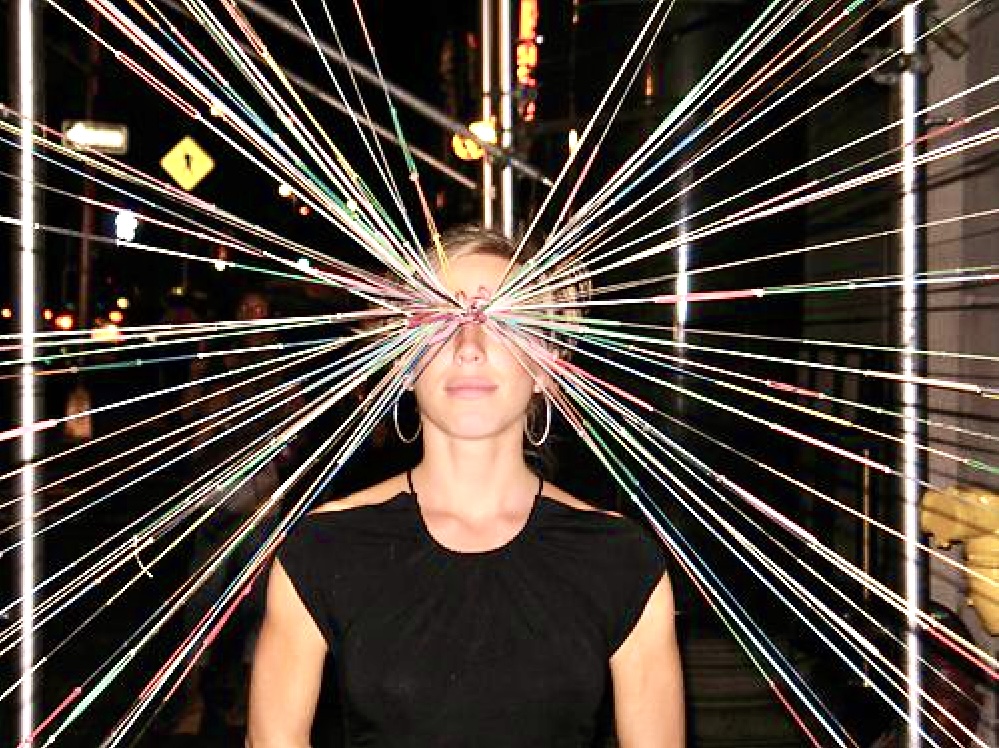
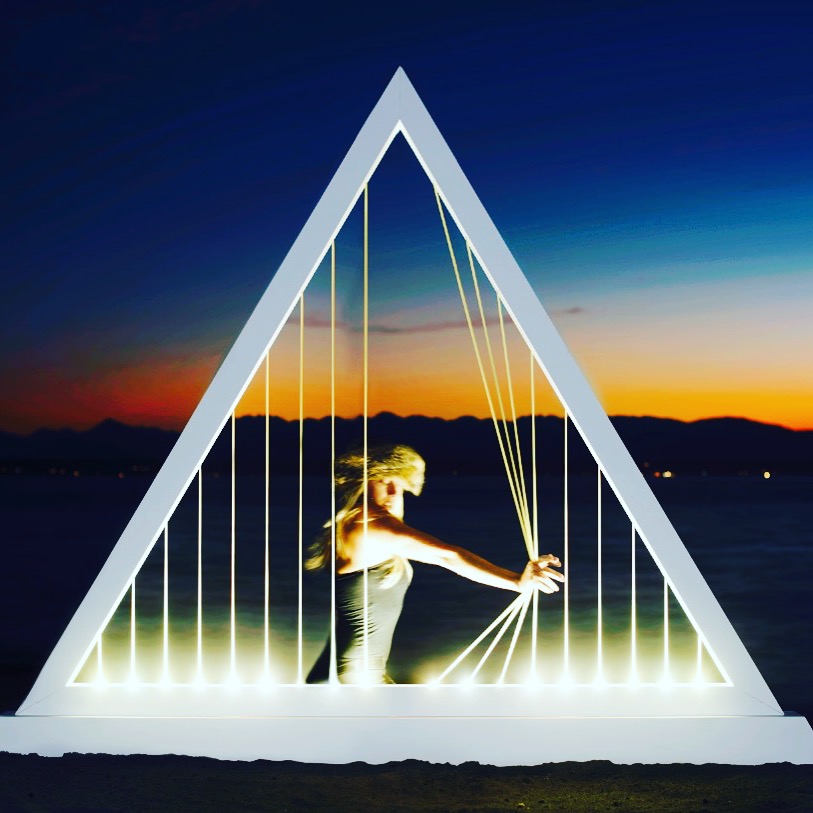
This image is the prototype. The intent is to scale into architecture & large-scale experience.
Elastic Light — a medium you can hold.
Jasmine holds a patent on Elastic Light — a medium she invented after working with rubber bands in the streets at night, imagining them glowing.
The result is an elastic architecture that moves with you: voluminous, touchable light you can sculpt, shape, and stretch with your own hands. It responds to you. It changes when you change it.
There is nothing else like it in the world.
US Patent No. 10,101,012
A social sculpture.
Jasmine's experiential installations are social sculptures — real life, in-person worlds that use human encounters as their medium. People from entirely different walks of life, languages, and cultures find themselves building something together: an unscripted, unrepeatable moment defined by curiosity, playfulness, and a profound interaction with their environment by reimagining it.
Jasmine sees invisible threads between people — and she likes to make them visible. Like constellations pulled down to eye level, her installations materialize the interconnectedness that is already there. Every person is a thread in the tapestry of life, and the work exists to remind us we are woven together.
Relational art is focused on inter-subjective encounters rather than the classic subject–object experience. Jasmine uses the threads as a vehicle to connect people — making the invisible visible, a catalyst for social change and collective empowerment. The art becomes functional: it is literally crafting transformation.
The web project began as a social experiment in the streets of New York City, rooted in a single question — I wonder if this could make people more present. She quickly saw that co-creation has the power to unify people unlike anything else. It creates an instant community, transforming liminal space into a destination where the pedestrian becomes the performer.
Meaning is cultivated collectively, through the chemistry of whoever is present. The people are the paint. The art is the paintbrush. These installations are about the process, not the product — unforgettable encounters that forge new bonds and relationships that would not otherwise exist. Relational art has the power to unify humanity.
- The New York Times
- Time Out New York
- Metro New York
- Good Day New York
- Architecture Daily
- Inhabitat
- The Stranger Seattle
- The Seattle Times
- Barneys New York
- Museum of Glass
- Bumbershoot Music Festival
- CitySol Music Festival
- City of Copenhagen
- TommyzToko Amsterdam
- Perugi Gallery Italy
- Bryant Park NYC
- Lower Manhattan Cultural Council
Water, clay, and the memory of touch.
I have always been fascinated by liquid light. I once lived on a houseboat surrounded by phosphorescence, and I would lie on my stomach at the edge of the dock with my hands in the water, watching the bioluminescence twinkle around my fingertips. I have spent a lifetime trying to capture that — to make light tangible. The interaction of water and light has always mesmerized me.
Clay came even earlier. My grandmother was a professional ceramic artist, and I have been working with clay since I was a very small child. It has been a lifelong love and practice. Of every medium I know, clay offers me the most sensuality — I am working with all four elements at once: earth, air, fire, water. And it is elastic. I breathe on it and it moves. It responds to my touch in ways nothing else does. It holds the memory of my hands.
This is what I translate into the luminous, elastic threads I invented. They have to be tactile. They have to be elastic. They have to respond to movement and touch the way clay does — the way water does — so the work becomes an architecture you can move through with your body, and alter with your hands.